
Why the Ants Come Back: The One Week After Treatment Decides It
Denver, Aurora, Lakewood & the Front Range metro
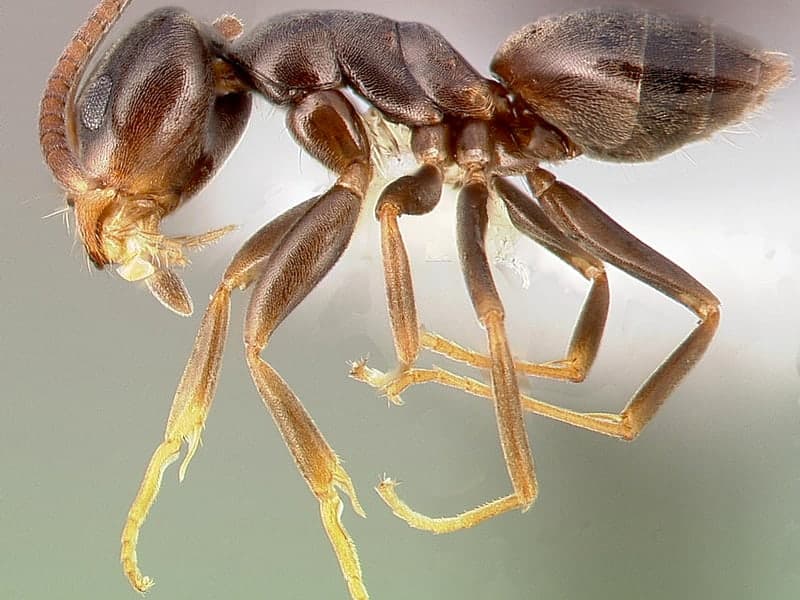
Most people call us about ants because of what's on the counter. A line of them along the backsplash, a few around the pet bowl, a trail coming out from under the baseboard. What's actually happening is bigger than that, and understanding it is the difference between a job that holds and a job that unravels in a month.
Ants are living inside the voids of your house. The wall cavities, the space under the cabinets, the gap behind the tile. The ones you can see are a small working fraction of a colony that is already indoors — and they're moving in and out through cracks, crevices, baseboard gaps, seams around counters, joints in flooring and tile, and openings around pipes and outlets.
What our service actually does
We treat the breaches — the specific cracks, crevices, gaps, and entry seams the ants are using — to eliminate the activity moving through them. Outside, that means perimeter granulation and sprays around the foundation so the pressure coming at the house drops. Inside, it's targeted work at the openings, not a fog of product across your living space.
That kills the traffic. What it doesn't do is empty the wall. There can be hundreds more ants sitting in the voids behind that treated crack, and they are still there the day after we leave.
The week after treatment is the part that decides it
This is the single most important thing we tell ant customers, and it's the step people skip: within about a week of the service, sanitize and caulk the cracks and crevices.
The reason is simple. Everything we use is biodegradable — it does its job and then it breaks down, by design. It is not meant to sit in your house forever. So once the residual wears off, whatever is still living in the wall void will use the same opening it always used, and you'll be right back where you started. Sealing during that window is what turns a treatment into a fix.
- Clean the area first — wipe down the treated cracks and the surfaces around them so the trail scent is gone and the caulk has something to bond to
- Caulk the cracks and crevices: baseboard gaps, seams where counters meet the wall, gaps in flooring and tile, and openings around pipes, outlets, and switch plates
- Work the outside too — foundation cracks, gaps around hose bibs and utility penetrations, and the seams around door and window frames
- Do it within about a week of the service, while the product is still working. That's the whole point of the timing
Then one follow-up
Once the sealing is done, we recommend a follow-up service. It catches anything that was sitting deep in a void during the first visit and confirms the sealed points are actually holding. It's a short visit, and it's what closes the job out for good rather than leaving you wondering.
A few things that help in the meantime
- Don't spray the trails yourself with store-bought product before we come — it scatters the colony and makes the problem harder to find
- Wipe up trails with soapy water instead; it clears the scent line without breaking the colony apart
- Keep pet food off the floor overnight and rinse recycling before it goes in the bin
- Fix the slow drips. Ants are usually after moisture as much as food, and a leaking trap or a damp spot under the sink is a standing invitation
Frequently Asked Questions
Why do ants come back after a pest control treatment?
Because the colony lives in the wall voids, not on the counter. Treatment eliminates the activity moving through the breaches, but there can be hundreds more ants sitting in the void behind a treated crack the day after service. The products used are biodegradable and break down by design, so once the residual wears off, the ants still in the wall use the same opening they always used unless it has been sealed.
When should I caulk cracks after an ant treatment?
Within about a week of the service, while the product is still working. That timing is the whole point — sealing during that window is what turns a treatment into a fix. Clean the treated cracks and surrounding surfaces first so the trail scent is gone and the caulk has something to bond to.
Which cracks actually need to be sealed?
Inside: baseboard gaps, seams where counters meet the wall, gaps in flooring and tile, and openings around pipes, outlets, and switch plates. Outside: foundation cracks, gaps around hose bibs and utility penetrations, and the seams around door and window frames. The outside work matters as much as the inside work — it lowers the pressure arriving at the house in the first place.
Why not use a product that lasts longer?
It exists, and we choose not to use it. Biodegradable products are safer for the people and pets living in the house and do not leave residue sitting in a kitchen indefinitely. The trade-off is that the sealing work genuinely matters — do that part and the results last; skip it and no product on the market saves you.
Should I spray the ant trails myself before you arrive?
No. Store-bought spray scatters the colony and makes it harder to find. Wipe trails with soapy water instead — that clears the scent line without breaking the colony apart. Also keep pet food off the floor overnight, rinse recycling before binning it, and fix slow drips; ants are usually after moisture as much as food, and a leaking trap under the sink is a standing invitation.
Do I need a follow-up visit for ants?
We recommend one after the sealing is done. It catches anything that was sitting deep in a void during the first visit and confirms the sealed points are holding. It is a short visit and it closes the job out rather than leaving you wondering. Free estimate at the time of inspection, no contracts required, and 10% off for veterans and first responders.
Looking for more? Read about general pest control or browse the full pest library.
Free Estimate.
Tell us what you're seeing. We'll diagnose, give you a real quote, and schedule fast.