
Carpenter Ants Control
in Denver.
Professional carpenter ants treatment across Denver. Wood-destroying ants that excavate galleries in moist or damaged wood.
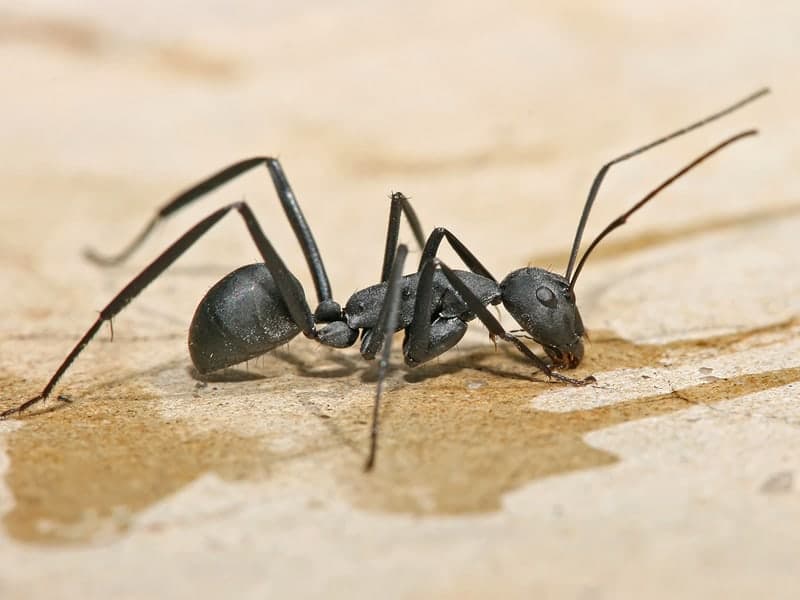
Carpenter Ants are a recurring concern across the Denver Metro Area, and Denver is no exception. Denver's mix of mature urban tree canopy, alley networks, and dense multi-family housing creates ideal pest habitat. The South Platte River corridor, Cherry Creek, and Sloan's Lake all support wildlife populations that overlap with adjacent residential blocks. Carpenter ants love moisture-damaged wood: window sills, door thresholds, deck ledger boards, roof leak zones, leaky chimney flashing, and rotting tree stumps within 100 yards of the house.
Older Front Range homes with original wood windows and aging flashing develop chronic carpenter ant pressure. New homes with composite materials are less vulnerable but still get carpenter ant satellite colonies in firewood and landscape timbers. In Denver specifically, dense multi-family housing means pests move building-to-building through wall voids and shared infrastructure. restaurant and tourist density supports established cockroach populations. mature tree canopy provides squirrel and roof-rat highways. greenways and parks act as wildlife reservoirs feeding into the surrounding blocks. compounds the picture — meaning Denver homes face carpenter ants pressure that's distinct from the metro average.
EPC has run carpenter ants jobs across every corner of Denver. Denver's housing ranges from 1900s-era brick bungalows in West Highlands and Wash Park to mid-century ranches in Hilltop and modern townhomes in RiNo. Older homes have rubble or stone foundations with countless micro-entry points; newer construction has tighter envelopes but is vulnerable through garage doors and utility penetrations. Our approach is wood-destroying ants that excavate galleries in moist or damaged wood.
How EPC Treats Carpenter Ants in Denver
Locate the Parent Colony
Workers we see indoors are foragers from a parent colony in a nearby tree, stump, or wall void. Tech follows trails and inspection patterns to find the actual nest — not just the visible ants.
Direct Nest Treatment
Once located, the colony is treated directly with non-repellent termiticide or dust applied into the nest cavity. Eliminates the queen and the entire colony.
Perimeter Barrier
Non-repellent perimeter treatment around the foundation and at known entry points. Foragers cross the barrier, return to satellite colonies, and transfer the active ingredient through the colony.
Moisture Source Identification
Tech identifies and reports the water issue feeding the carpenter ants — leaking gutter, missing flashing, blocked weephole, wet crawlspace insulation. Without the moisture fix, ants come back.
Signs of Carpenter Ants in Denver Homes
- Large black ants (1/4 inch+) inside the home, especially at night
- Coarse sawdust-like 'frass' below baseboards, windowsills, or crawlspace beams
- Soft rustling sounds inside walls or behind moisture-damaged wood
- Winged ants emerging indoors in spring (always indicates an interior nest)
- Trails of large black ants between an outdoor source (tree, woodpile) and the house
Carpenter Ants Prevention for Denver Properties
- Repair roof leaks, gutter overflows, and chronic plumbing drips immediately
- Replace water-damaged wood — don't just paint over it
- Keep firewood, lumber, and mulch piles away from the house
- Trim tree branches so none touch the roof or siding (ant highways)
- Improve crawlspace ventilation; install vapor barrier where humidity is high
Carpenter Ants in Denver — Frequently Asked Questions
How much does carpenter ants treatment cost in Denver, CO?
There is no flat rate. Carpenter Ants pricing in Denver depends on the size of the property, how far the activity has already spread, and how much access the technician needs. You get a free estimate at the time of inspection and an honest quote before any work begins — no charge for the quote itself. Veterans and first responders receive 10% off. Call (303) 766-3031 or (303) 888-6657.
How soon can you treat carpenter ants in Denver?
Denver sits inside our core coverage in Denver County, so same-day appointments are often available. Call (303) 766-3031 or (303) 888-6657 and we will tell you honestly what today and tomorrow look like rather than booking you out and hoping. Environmental Pest Control answers Monday through Friday, 8am to 6pm Mountain Time.
Is carpenter ants treatment in Denver guaranteed?
Yes. If carpenter ants return inside your service window, the re-service is free of charge — it is built into the original quote rather than sold as an add-on. Any follow-up visits the treatment plan calls for are included in the price you were quoted up front.
Why do Denver homes get carpenter ants?
Dense multi-family housing means pests move building-to-building through wall voids and shared infrastructure. Restaurant and tourist density supports established cockroach populations. Carpenter ants love moisture-damaged wood: window sills, door thresholds, deck ledger boards, roof leak zones, leaky chimney flashing, and rotting tree stumps within 100 yards of the house.
What are the first signs of carpenter ants in a Denver home?
The earliest indicators are: large black ants (1/4 inch+) inside the home, especially at night; coarse sawdust-like 'frass' below baseboards, windowsills, or crawlspace beams; soft rustling sounds inside walls or behind moisture-damaged wood. Catching any one of these early usually means a smaller, cheaper job than waiting until the problem is obvious.
Do you serve my part of Denver?
Yes — Environmental Pest Control covers all of Denver (80201, 80202, 80203, 80204, 80205, 80206 and surrounding ZIP codes) plus 200+ Colorado ZIP codes across the Denver metro and Front Range. We have been locally owned and operated since 1985 — not a franchise.
How do I tell carpenter ants from termites?
Carpenter ants have a pinched waist, bent antennae, and unequal-length wings. Termites have a straight body, straight antennae, and equal-length wings. Carpenter ants leave coarse frass; termites leave mud tubes (sub) or fine pellets (drywood).
Are carpenter ants as destructive as termites?
Slower but real. A mature carpenter ant colony can hollow out a wood beam over years. Termites do it faster, but both warrant intervention if active.
Free Carpenter Ants Estimate in Denver
Same-day appointments usually available. Call now or request online.
Call (303) 766-3031Other pests we treat in Denver
Carpenter Ants control in nearby cities
Free Carpenter Ants Estimate in Denver.
Tell us what you're seeing. We'll diagnose, quote, and schedule treatment fast.