
Carpenter Bees Control
in Denver.
Professional carpenter bees treatment across Denver. Wood-boring bees that drill perfect 1/2-inch holes in eaves and decks.
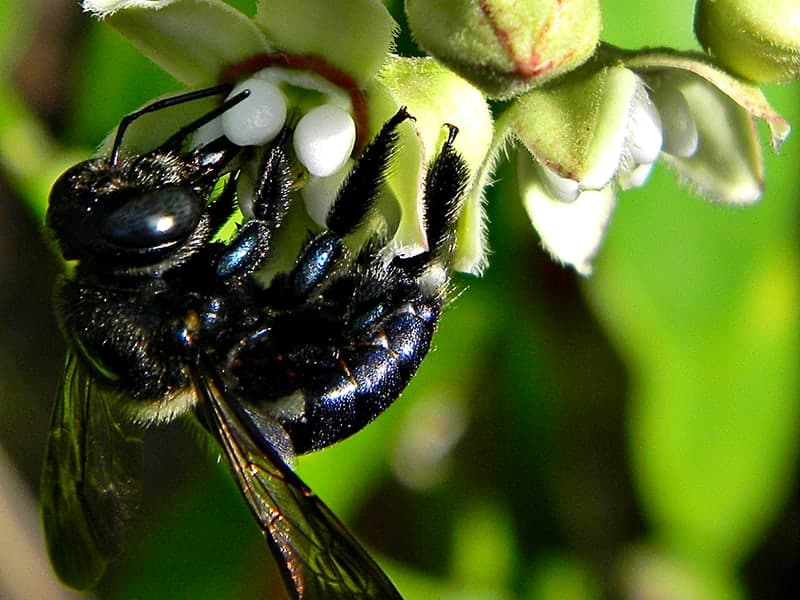
Carpenter Bees are a recurring concern across the Denver Metro Area, and Denver is no exception. Denver's mix of mature urban tree canopy, alley networks, and dense multi-family housing creates ideal pest habitat. The South Platte River corridor, Cherry Creek, and Sloan's Lake all support wildlife populations that overlap with adjacent residential blocks. Carpenter bees love unfinished cedar, redwood, fir, and pine — especially deck rails, eave fascia, fence posts, and outbuilding framing in sun-exposed locations.
Front Range homes with heavy cedar siding and unfinished deck construction experience persistent carpenter bee damage. Older fences, log structures, and pergolas are particularly vulnerable. In Denver specifically, dense multi-family housing means pests move building-to-building through wall voids and shared infrastructure. restaurant and tourist density supports established cockroach populations. mature tree canopy provides squirrel and roof-rat highways. greenways and parks act as wildlife reservoirs feeding into the surrounding blocks. compounds the picture — meaning Denver homes face carpenter bees pressure that's distinct from the metro average.
EPC has run carpenter bees jobs across every corner of Denver. Denver's housing ranges from 1900s-era brick bungalows in West Highlands and Wash Park to mid-century ranches in Hilltop and modern townhomes in RiNo. Older homes have rubble or stone foundations with countless micro-entry points; newer construction has tighter envelopes but is vulnerable through garage doors and utility penetrations. Our approach is wood-boring bees that drill perfect 1/2-inch holes in eaves and decks.
How EPC Treats Carpenter Bees in Denver
Direct Tunnel Treatment
Insecticidal dust applied directly into each tunnel. Kills the female, larvae, and any returning bees. Most effective in spring before egg laying.
Tunnel Sealing
After treatment, tunnels are plugged with wood putty or dowels and painted/sealed. Prevents reuse next season — carpenter bees prefer existing tunnels.
Preventive Wood Treatment
Borate-based treatment to vulnerable wood surfaces — eaves, deck framing, fence posts. Reduces susceptibility for several years.
Painting/Sealing Recommendations
Carpenter bees avoid painted and stained wood. Tech identifies which wood surfaces need attention to break the year-over-year cycle.
Signs of Carpenter Bees in Denver Homes
- Perfect 1/2-inch round holes in deck rails, eaves, fascia, or fence posts
- Yellow-orange staining on wood below holes (bee waste)
- Coarse sawdust below holes
- Large bees hovering near or returning to holes (especially in spring and early summer)
- Year-over-year damage in the same wood pieces (returning bees and new generations)
Carpenter Bees Prevention for Denver Properties
- Paint or stain all unfinished exterior wood — carpenter bees rarely tunnel sealed surfaces
- Replace severely damaged wood members; small damage can be filled and painted
- Inspect deck, eaves, and fence in early spring for new holes; treat immediately
- Use hardwoods or composite materials for new construction (less attractive to bees)
- Plug existing holes after treatment so they aren't reused
Carpenter Bees in Denver — Frequently Asked Questions
How much does carpenter bees treatment cost in Denver, CO?
There is no flat rate. Carpenter Bees pricing in Denver depends on the size of the property, how far the activity has already spread, and how much access the technician needs. You get a free estimate at the time of inspection and an honest quote before any work begins — no charge for the quote itself. Veterans and first responders receive 10% off. Call (303) 766-3031 or (303) 888-6657.
How soon can you treat carpenter bees in Denver?
Denver sits inside our core coverage in Denver County, so same-day appointments are often available. Call (303) 766-3031 or (303) 888-6657 and we will tell you honestly what today and tomorrow look like rather than booking you out and hoping. Environmental Pest Control answers Monday through Friday, 8am to 6pm Mountain Time.
Is carpenter bees treatment in Denver guaranteed?
Yes. If carpenter bees return inside your service window, the re-service is free of charge — it is built into the original quote rather than sold as an add-on. Any follow-up visits the treatment plan calls for are included in the price you were quoted up front.
Why do Denver homes get carpenter bees?
Dense multi-family housing means pests move building-to-building through wall voids and shared infrastructure. Restaurant and tourist density supports established cockroach populations. Carpenter bees love unfinished cedar, redwood, fir, and pine — especially deck rails, eave fascia, fence posts, and outbuilding framing in sun-exposed locations.
What are the first signs of carpenter bees in a Denver home?
The earliest indicators are: perfect 1/2-inch round holes in deck rails, eaves, fascia, or fence posts; yellow-orange staining on wood below holes (bee waste); coarse sawdust below holes. Catching any one of these early usually means a smaller, cheaper job than waiting until the problem is obvious.
Do you serve my part of Denver?
Yes — Environmental Pest Control covers all of Denver (80201, 80202, 80203, 80204, 80205, 80206 and surrounding ZIP codes) plus 200+ Colorado ZIP codes across the Denver metro and Front Range. We have been locally owned and operated since 1985 — not a franchise.
Are carpenter bees dangerous?
Mostly no. Females can sting but rarely do; males hover aggressively but can't sting at all. The danger is wood damage over years, not bites.
Will the wood collapse?
Not usually from one or two holes — but a fence post or rail with 5–10 tunnels over multiple years can fail. Catch it early.
Free Carpenter Bees Estimate in Denver
Same-day appointments usually available. Call now or request online.
Call (303) 766-3031Other pests we treat in Denver
Carpenter Bees control in nearby cities
Free Carpenter Bees Estimate in Denver.
Tell us what you're seeing. We'll diagnose, quote, and schedule treatment fast.