
Box Elder Bugs Treatment
Across the Front Range.
Black-and-red overwintering bugs that swarm sunny walls in fall.
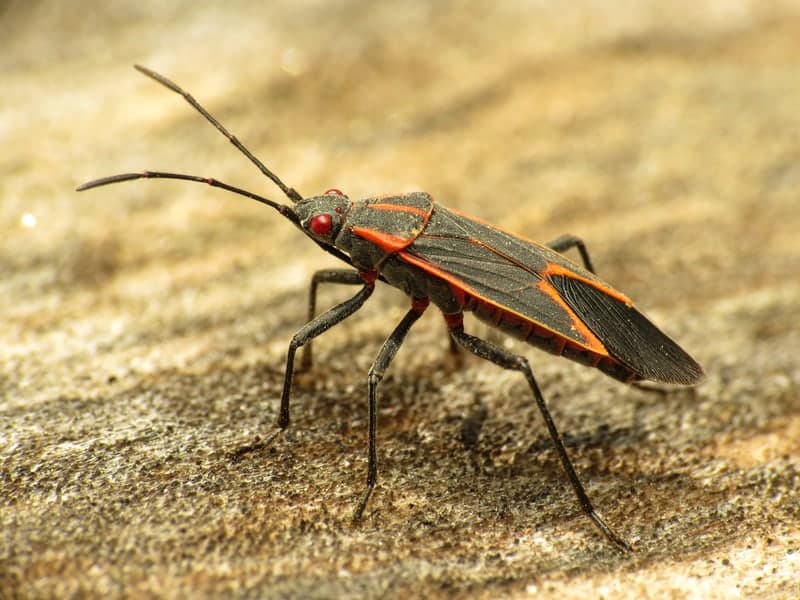
Box elder bugs are a fall and spring nuisance, not a damaging pest. Adults gather on sunny south- and west-facing walls in late September and October, then squeeze into wall voids and attics to overwinter.
Spring brings them back out, often emerging inside the home through electrical outlets and window frames. EPC's treatment is a perimeter timing play — early fall to prevent indoor entry, and direct treatment of overwintering aggregations.
About Box Elder Bugs
Adult box elder bugs are 1/2 inch, black with red markings on the back. They feed on box elder, maple, and ash tree seeds. They don't bite, don't damage homes structurally, and don't lay eggs indoors. The annoyance is sheer volume — populations of thousands gathering on walls every fall.
Signs You Have Box Elder Bugs
- Hundreds of black-and-red bugs on sunny walls in September–October
- Bugs emerging indoors in late winter and early spring
- Reddish staining on light-colored walls and curtains (crushed bug fluid)
- Bugs in wall voids, attics, window frames, and behind shutters
- Female box elder trees nearby (the seed source)
How EPC Treats Box Elder Bugs
Fall Perimeter Barrier
Residual treatment applied to siding, foundation, and entry zones in early September — before mass aggregation begins. Most effective single treatment of the year.
Direct Aggregation Treatment
When bugs are already gathered on walls, direct contact treatment knocks down the visible population. Doesn't address the indoor wall-void issue but provides immediate relief.
Entry Point Sealing
Tech identifies and seals gaps around windows, soffits, fascia, and utility penetrations. Reduces indoor emergence in spring.
Spring Spot Treatment
When overwintering bugs emerge in spring, targeted treatment in attics and wall voids reduces indoor migration.
How to Prevent Box Elder Bugs
- Schedule fall perimeter treatment in early September
- Seal cracks around windows, doors, and utility entries before October
- Caulk soffit, fascia, and chimney flashing gaps
- Replace damaged window screens and door sweeps
- If possible, remove female box elder trees from within 100 feet of the home
Frequently Asked Questions
Are box elder bugs harmful?
No. They don't bite, don't damage wood or fabric, and don't reproduce indoors. They're a nuisance only — but the volume can be overwhelming.
Why do they gather on sunny walls?
They're warming up before overwintering. South- and west-facing walls hit the highest temperatures in late afternoon, and that's where they aggregate every fall.
Do I need to treat every year?
If you have nearby box elder, maple, or ash trees, yes — annual fall perimeter is the most reliable prevention. Without trees nearby, populations are usually manageable without service.
How do I get them out of my walls?
Once they're inside the wall voids overwintering, you can't fully remove them — they emerge gradually until April. Vacuum them as they appear, and seal entry points before next fall.
Areas We Treat Box Elder Bugs
EPC handles box elder bugs calls across the entire Denver Metro Area. Click your city for local detail:
Related Pests
Free Box Elder Bugs Estimate.
Tell us what you're seeing. We'll diagnose, give you a real quote, and schedule fast.