
Stink Bugs Treatment
Across the Front Range.
Brown marmorated and conifer seed bugs that overwinter in walls.
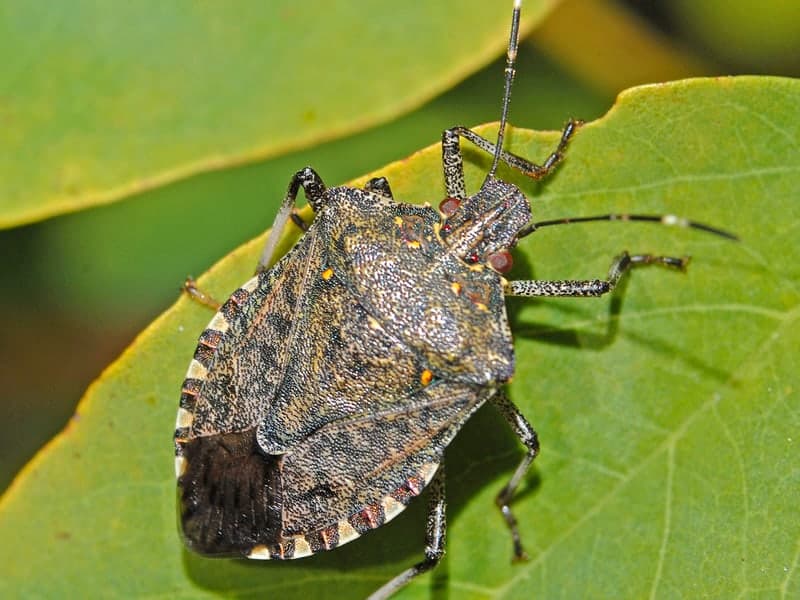
Stink bugs are another fall-into-spring overwintering pest — they enter homes through gaps in late September and October, hibernate in wall voids and attics, then emerge slowly through the winter and pile up at sunny windows.
The brown marmorated stink bug is the species most homeowners encounter. Western conifer seed bugs look similar and behave the same. Both are odor-producing when threatened or crushed.
About Stink Bugs
Brown marmorated stink bugs are 5/8 inch, mottled brown shield-shaped insects. Western conifer seed bugs are slimmer with leaf-like leg expansions. Both gather in fall, overwinter as adults in protected voids, and emerge in spring. They feed on plants outdoors but don't reproduce indoors.
Signs You Have Stink Bugs
- Shield-shaped brown bugs at sunny windows, especially February–April
- Foul cilantro-like odor when bugs are crushed or threatened
- Bugs emerging from light fixtures, electrical outlets, ceiling vents
- Population spike on sunny fall walls in October
- Found in attics, wall voids, behind window frames during winter
How EPC Treats Stink Bugs
Fall Perimeter Barrier
Residual treatment to siding, soffits, and entry zones in early to mid-September. Highest-impact single treatment of the year for overwintering bugs.
Entry Point Sealing
Caulk and screen repair to gaps in eaves, around windows, and at utility entries. Reduces overwintering population by 60–80%.
Spring Window Treatment
Targeted treatment in attics and around interior windowsills as overwintering bugs emerge. Reduces visible nuisance dramatically.
Vacuum-and-Discard Plan
Tech walks you through proper vacuuming technique — never squash, always vacuum and dispose to avoid odor and staining.
How to Prevent Stink Bugs
- Fall perimeter treatment scheduled before mid-September
- Seal exterior gaps around windows, soffits, fascia, utility penetrations
- Replace damaged window screens; install door sweeps
- Vacuum (don't crush) any visible bugs to avoid odor and staining
- Reduce exterior lighting at night during fall aggregation season
Frequently Asked Questions
What's the smell?
A defensive chemical released when stink bugs are threatened or crushed. Some describe it as cilantro, others as rotten almond. It clings to fabric and skin and takes hours to dissipate.
Do they bite or damage anything?
No bites, no structural damage. They are a serious agricultural pest (orchard fruit damage), but indoors they're a pure nuisance.
Why do they appear in February?
Sunny winter days warm overwintering bugs in wall voids, triggering them to emerge. They head for the brightest light source — usually a south-facing window — and pile up there.
Can I prevent them entirely?
Aggressive sealing and fall perimeter treatment can reduce populations by 80%+. Total prevention is unrealistic in homes with significant exterior wood and window framing.
Areas We Treat Stink Bugs
EPC handles stink bugs calls across the entire Denver Metro Area. Click your city for local detail:
Related Pests
Free Stink Bugs Estimate.
Tell us what you're seeing. We'll diagnose, give you a real quote, and schedule fast.