
Centipedes Treatment
Across the Front Range.
Fast-moving, many-legged predators that show up in damp basements, bathrooms, and crawlspaces.
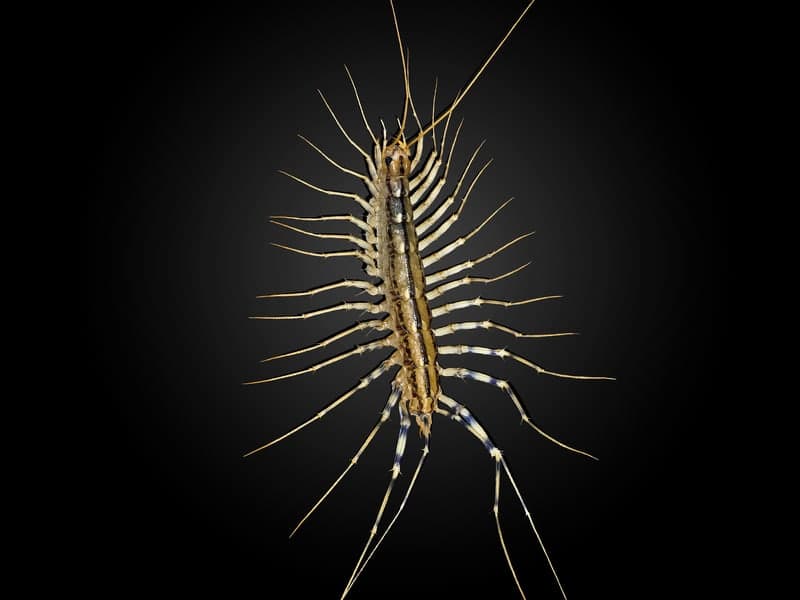
Centipedes are the long, fast-moving, many-legged bugs that appear in basements, bathrooms, and crawlspaces along the Front Range. House centipedes are the most common — pale gray-yellow, an inch or two long, with 15 pairs of legs that ripple as they sprint.
They look alarming but they're actually predators of other pests — silverfish, roaches, spiders. Most homeowners want them gone anyway. EPC treats with perimeter residual + moisture and harborage reduction so the things they're hunting also go away.
About Centipedes
House centipedes (Scutigera coleoptrata) are the standard Colorado indoor species — yellowish-gray, fast, with long antennae and long rear legs that look like extra antennae. They live 3–7 years (long for an arthropod), reproduce slowly, and prefer humid hiding spots. They are mildly venomous but bites on humans are very rare and harmless.
Signs You Have Centipedes
- Fast-moving, many-legged bugs in basements, bathtubs, sinks, and on basement walls at night
- Concentration in damp areas — under boxes, behind washing machines, around floor drains
- Other pest sightings nearby (centipedes follow their prey — silverfish, roaches, spiders)
- Activity primarily at night; centipedes hide during the day
- Higher numbers in finished basements with poor ventilation and humidity issues
How EPC Treats Centipedes
Perimeter & Foundation Barrier
Residual treatment around the foundation, window wells, and basement entry zones. Knocks down the outdoor population most likely to come in.
Crack-and-Crevice Treatment
Insecticidal dust in basement and crawlspace voids, around plumbing penetrations, and in baseboards. Targets the dark, humid spots where centipedes harbor.
Moisture & Harborage Reduction
Tech identifies humidity issues (leaking pipes, missing vapor barrier, poor crawlspace ventilation) and harborage zones (cardboard storage, leaf litter against foundation). Drying out the environment crashes centipede populations.
Prey-Source Control
Centipedes are predators — if they're around, their food source is too. We treat for silverfish, roaches, and other prey alongside the centipede work.
How to Prevent Centipedes
- Run dehumidifiers in basements and crawlspaces (target <50% RH)
- Seal cracks around basement windows, utility penetrations, and floor-wall joints
- Remove cardboard storage and replace with sealed plastic bins
- Fix plumbing leaks and ensure proper crawlspace ventilation
- Clear leaf litter, mulch, and wood piles from against the foundation
Frequently Asked Questions
Are centipedes dangerous?
House centipedes are mildly venomous but bites on humans are very rare — they prefer to flee rather than bite, and their jaws struggle with human skin. No real medical concern for typical Colorado homes.
Why do I keep seeing centipedes in my bathtub?
They come up drains and pipe chases looking for moisture, then get trapped in the smooth tub. It's usually a sign of moisture issues in walls or under the foundation.
Will killing centipedes attract more?
No, but if you have a steady supply you have a humidity and harborage problem feeding them. Fix the moisture and the centipedes go with it.
Do centipedes mean my house has other pests?
Often, yes. Centipedes are predators — silverfish, small roaches, spiders are their food. If centipede numbers are high, those other populations probably are too.
Areas We Treat Centipedes
EPC handles centipedes calls across the entire Denver Metro Area. Click your city for local detail:
Related Pests
Free Centipedes Estimate.
Tell us what you're seeing. We'll diagnose, give you a real quote, and schedule fast.