
Millipedes Treatment
Across the Front Range.
Slow-moving, coiling, many-legged decomposers that wander into basements and garages after rain.
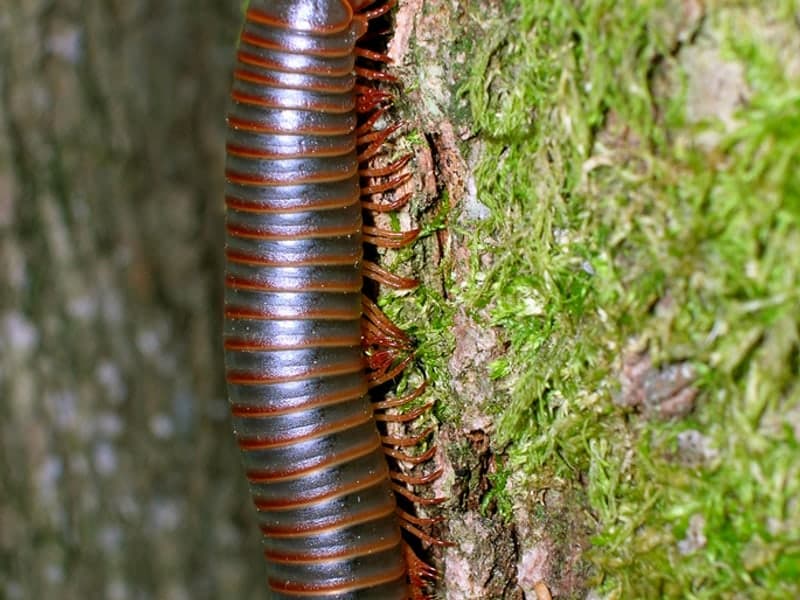
Millipedes are the slow-moving, dark, segmented bugs that curl into a tight spiral when disturbed. Unlike centipedes (predators, fast), millipedes eat decaying plant matter and are mostly outdoor creatures — they wander indoors when conditions outside get too wet or too dry.
Most Colorado millipede invasions happen after heavy rain or during fall migrations, when populations move from mulch beds and leaf litter into basements, garages, and ground-level rooms. EPC treats with perimeter barrier + outdoor harborage reduction.
About Millipedes
Millipedes are detritivores — they eat decaying plant material, fungi, and damp organic matter. Adult Colorado species are typically 1–2 inches long, dark brown to black, with two pairs of legs per body segment (centipedes have one pair). They live 1–10 years depending on species, and they secrete a defensive chemical when handled — harmless but smelly.
Signs You Have Millipedes
- Slow, dark, coiling bugs in basements, garages, and ground-floor rooms
- Mass appearances after heavy rain or during fall migrations
- Dead millipedes drying out on basement floors (they need moisture and die quickly indoors)
- Concentration in damp mulch beds, leaf litter, and rotting wood outdoors
- Tight-spiral defensive posture when touched or disturbed
How EPC Treats Millipedes
Perimeter Barrier
Residual treatment around the foundation, mulch beds, and entry zones. Catches millipedes as they migrate from outdoor harborage toward the house.
Granular Bait Around Foundation
Granular insecticide applied to mulch beds and turf along the foundation. Knocks down the outdoor population before it migrates indoors.
Habitat & Moisture Modification
Tech identifies harborage zones — thick mulch, leaf litter, wood piles, sweating foundation walls — and recommends mowing, mulch reduction, drainage fixes, and downspout extension.
Indoor Spot Treatment
Targeted treatment in basement and garage perimeter areas during active migration events. Pairs with sealing entry points so the next wave doesn't come in.
How to Prevent Millipedes
- Pull mulch back at least 6 inches from the foundation; keep depth under 3 inches
- Direct downspouts and grading away from the house — wet soil at the foundation is millipede heaven
- Remove leaf litter, woodpiles, and brush against the home
- Seal foundation cracks, basement window gaps, and garage door weatherstripping
- Run dehumidifiers in basements to make indoor conditions inhospitable
Frequently Asked Questions
What's the difference between centipedes and millipedes?
Millipedes are slow, dark, coil up when touched, and eat decaying plants. Centipedes are fast, pale, flatter, and predatory (they eat other bugs). Both have many legs but they're very different animals.
Are millipedes dangerous?
No. They don't bite, don't sting, and don't damage structures. The defensive chemical they release when threatened can stain skin slightly and smells unpleasant but is otherwise harmless.
Why do millipedes suddenly appear in my basement?
Either heavy rain pushed them out of saturated soil, or fall weather is triggering a migration. They're looking for stable moisture. They don't reproduce indoors — they die quickly in dry indoor air.
Can I just vacuum them up?
Yes — that's the right move for what's already inside. The longer-term fix is perimeter treatment and reducing the wet mulch/leaf litter habitat next to the house.
Areas We Treat Millipedes
EPC handles millipedes calls across the entire Denver Metro Area. Click your city for local detail:
Related Pests
Free Millipedes Estimate.
Tell us what you're seeing. We'll diagnose, give you a real quote, and schedule fast.