
Squirrels
Across the Front Range.
Attic and soffit invaders that chew through fascia, framing, and electrical. Removal is referred to a licensed wildlife specialist.
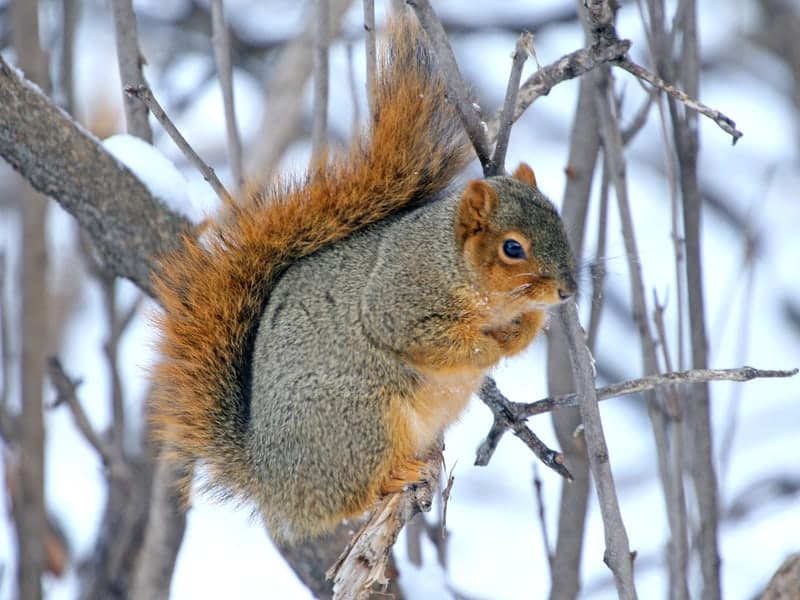
Tree squirrels in attics are a chewing pest first and a noise pest second. They gnaw through fascia, soffit corners, attic vents, and once inside, they chew framing and electrical wiring (a major fire risk).
Straight answer on who does the work: squirrel removal is not something we handle in-house. We partner with licensed wildlife specialists and coordinate the referral. Call us anyway — we'll help you confirm it's actually squirrels and not rats, tell you what the job should involve, and point you to someone who does it properly.
About Squirrels
Common Colorado tree squirrels include fox squirrels (large, reddish-orange) and gray squirrels (smaller, gray). They produce 2 litters per year (spring and late summer) of 3–5 young. They're territorial and return to nesting sites year after year. Active during the day, especially early morning and late afternoon.
Signs You Have Squirrels
- Daytime scratching, scampering, or rolling sounds in the attic or wall voids
- Large rounded entry holes in fascia, soffit corners, or attic vents
- Squirrels seen entering/exiting the same spot repeatedly
- Chewed wood, vinyl trim, or roof shingles near the entry point
- Scattered nest material (insulation, leaves, twigs) in attic
- Damaged garden bird feeders, fruit, and stored seed
Squirrels: What Happens Next
Identification First — Call Us
Squirrels and rats get confused constantly, and the two jobs are nothing alike. Describe what you're hearing and when, and we'll tell you which one you've got. If it turns out to be rats, that is our work and we can handle it.
Referral to a Licensed Wildlife Specialist
Squirrel removal is not something we perform in-house. We partner with licensed wildlife specialists and coordinate the referral. You get pointed to someone who does this properly rather than sold a service we don't provide.
What the Job Should Involve
So you know what you're being quoted for: live trapping or a one-way valve at the active entry, then sealing with metal flashing or 1/2-inch hardware cloth — never a plain wood patch, which squirrels chew straight through. Timing matters too; the entry should never be sealed during denning season without confirming all young are out.
Tree Branch Trimming
Squirrels reach roofs from overhanging branches. Trimming limbs back at least 6 feet from the house removes the bridge, and it's something you can arrange yourself without waiting on anyone.
How to Prevent Squirrels
- Trim tree branches at least 6 feet from the roof
- Cap chimneys and screen all attic vents with 1/2-inch hardware cloth
- Repair fascia and soffit gaps before squirrels find them
- Install metal flashing on power line entry points (squirrel highways)
- Annual roof and soffit inspection in fall
Frequently Asked Questions
How do I know if it's squirrels or rats?
Time of activity is the easiest tell. Squirrels are active during the day (especially morning and evening); rats are active at night. Squirrel sounds are heavier and more rolling; rat sounds are quicker and skittery.
Can squirrels really damage my house?
Yes — they chew through fascia, soffit corners, attic vents, and once inside, they gnaw structural wood and electrical wiring. Squirrel-chewed wiring is a documented fire-cause in attics.
Will the squirrel come back after I block the hole?
If you blocked it while she was away from the nest, she'll spend hours frantically trying to get back in (and might chew through to her young). Always confirm the squirrel is out — and there are no babies — before sealing.
Do you remove squirrels?
Not in-house. Squirrel removal is referred to a licensed wildlife specialist we partner with, and we'll coordinate that referral. Call (303) 766-3031 anyway — we'll help you confirm it's squirrels rather than rats, tell you what the job should involve so you know what you're being quoted for, and point you to someone who does it right. Rats, mice, voles, bats, and birds we do handle directly.
Squirrels Across the Denver Metro
We take squirrels calls from across the entire Denver Metro Area — we just refer the removal itself to a licensed specialist. Click your city for local detail:
Related Pests
Not sure it’s squirrels?
Tell us what you're seeing. We'll diagnose, give you a real quote, and schedule fast.