
Carpenter Ants Treatment
Across the Front Range.
Wood-destroying ants that excavate galleries in moist or damaged wood.
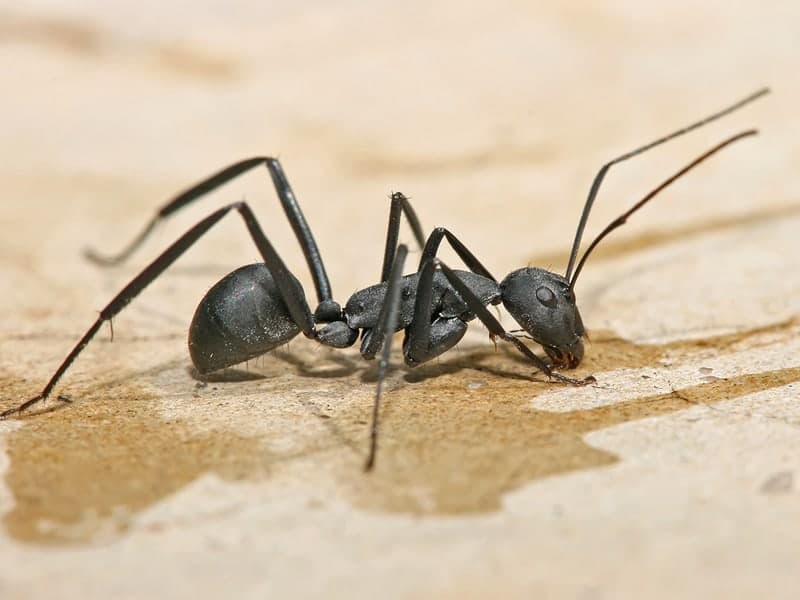
Carpenter ants don't eat wood — they tunnel through it to build nests. They prefer water-damaged or moist wood: leaky window frames, sweating crawlspaces, old roof leaks, and decks with poor drainage.
Left alone, carpenter ant colonies can hollow out structural wood over several years. EPC's treatment finds the parent colony, eliminates it, and identifies the moisture problem driving the infestation.
About Carpenter Ants
Carpenter ants are 1/4 to 5/8 inch long, mostly black (though some species are red-and-black). The largest of the common Colorado ant species. Mature colonies have 10,000–20,000 workers and a single queen. They're nocturnal foragers and follow scent trails to food. Winged reproductives swarm in late spring.
Signs You Have Carpenter Ants
- Large black ants (1/4 inch+) inside the home, especially at night
- Coarse sawdust-like 'frass' below baseboards, windowsills, or crawlspace beams
- Soft rustling sounds inside walls or behind moisture-damaged wood
- Winged ants emerging indoors in spring (always indicates an interior nest)
- Trails of large black ants between an outdoor source (tree, woodpile) and the house
How EPC Treats Carpenter Ants
Locate the Parent Colony
Workers we see indoors are foragers from a parent colony in a nearby tree, stump, or wall void. Tech follows trails and inspection patterns to find the actual nest — not just the visible ants.
Direct Nest Treatment
Once located, the colony is treated directly with non-repellent termiticide or dust applied into the nest cavity. Eliminates the queen and the entire colony.
Perimeter Barrier
Non-repellent perimeter treatment around the foundation and at known entry points. Foragers cross the barrier, return to satellite colonies, and transfer the active ingredient through the colony.
Moisture Source Identification
Tech identifies and reports the water issue feeding the carpenter ants — leaking gutter, missing flashing, blocked weephole, wet crawlspace insulation. Without the moisture fix, ants come back.
How to Prevent Carpenter Ants
- Repair roof leaks, gutter overflows, and chronic plumbing drips immediately
- Replace water-damaged wood — don't just paint over it
- Keep firewood, lumber, and mulch piles away from the house
- Trim tree branches so none touch the roof or siding (ant highways)
- Improve crawlspace ventilation; install vapor barrier where humidity is high
Frequently Asked Questions
How do I tell carpenter ants from termites?
Carpenter ants have a pinched waist, bent antennae, and unequal-length wings. Termites have a straight body, straight antennae, and equal-length wings. Carpenter ants leave coarse frass; termites leave mud tubes (sub) or fine pellets (drywood).
Are carpenter ants as destructive as termites?
Slower but real. A mature carpenter ant colony can hollow out a wood beam over years. Termites do it faster, but both warrant intervention if active.
Why do I see ants only at night?
Carpenter ants are nocturnal foragers. Daytime activity often means a large established colony. Run lights off in suspected areas at night and watch for traffic.
Will spraying along the baseboard work?
No — repellent sprays push the ants to relocate satellite nests deeper into walls. Non-repellent treatments and direct nest treatment are what actually eliminate carpenter ants.
Areas We Treat Carpenter Ants
EPC handles carpenter ants calls across the entire Denver Metro Area. Click your city for local detail:
Related Pests
Free Carpenter Ants Estimate.
Tell us what you're seeing. We'll diagnose, give you a real quote, and schedule fast.