
Carpenter Bees Treatment
Across the Front Range.
Wood-boring bees that drill perfect 1/2-inch holes in eaves and decks.
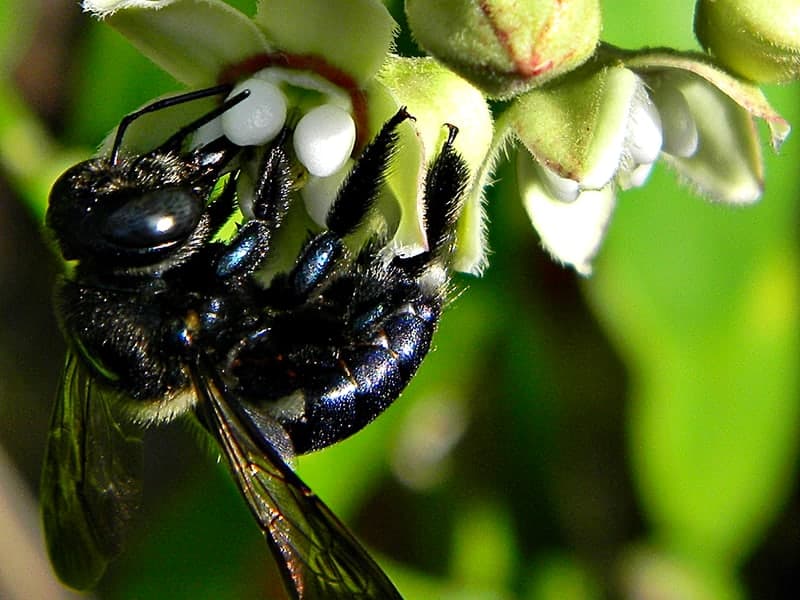
Carpenter bees aren't honeybees — they don't make honey or live in colonies. Each female drills her own perfect 1/2-inch round hole in unfinished wood (deck rails, eaves, fascia, fence posts) and tunnels in to lay eggs.
Year over year, the same wood gets re-tunneled and damage accumulates. EPC treats existing tunnels, plugs them, and applies preventive treatment to vulnerable wood surfaces.
About Carpenter Bees
Carpenter bees are 3/4 to 1 inch, looking like bumblebees but with a shiny black abdomen instead of fuzzy yellow. Females do all the tunneling (and can sting but rarely do); males hover aggressively but have no stinger. Each female tunnels 4–6 inches into wood and lays a single line of eggs in chambers separated by chewed wood. They prefer unpainted, weathered cedar, redwood, fir, and pine.
Signs You Have Carpenter Bees
- Perfect 1/2-inch round holes in deck rails, eaves, fascia, or fence posts
- Yellow-orange staining on wood below holes (bee waste)
- Coarse sawdust below holes
- Large bees hovering near or returning to holes (especially in spring and early summer)
- Year-over-year damage in the same wood pieces (returning bees and new generations)
How EPC Treats Carpenter Bees
Direct Tunnel Treatment
Insecticidal dust applied directly into each tunnel. Kills the female, larvae, and any returning bees. Most effective in spring before egg laying.
Tunnel Sealing
After treatment, tunnels are plugged with wood putty or dowels and painted/sealed. Prevents reuse next season — carpenter bees prefer existing tunnels.
Preventive Wood Treatment
Borate-based treatment to vulnerable wood surfaces — eaves, deck framing, fence posts. Reduces susceptibility for several years.
Painting/Sealing Recommendations
Carpenter bees avoid painted and stained wood. Tech identifies which wood surfaces need attention to break the year-over-year cycle.
How to Prevent Carpenter Bees
- Paint or stain all unfinished exterior wood — carpenter bees rarely tunnel sealed surfaces
- Replace severely damaged wood members; small damage can be filled and painted
- Inspect deck, eaves, and fence in early spring for new holes; treat immediately
- Use hardwoods or composite materials for new construction (less attractive to bees)
- Plug existing holes after treatment so they aren't reused
Frequently Asked Questions
Are carpenter bees dangerous?
Mostly no. Females can sting but rarely do; males hover aggressively but can't sting at all. The danger is wood damage over years, not bites.
Will the wood collapse?
Not usually from one or two holes — but a fence post or rail with 5–10 tunnels over multiple years can fail. Catch it early.
Are carpenter bees pollinators?
Yes. They visit flowers and pollinate. We treat them only when they're actively damaging structural wood, and we recommend painting/sealing as the primary prevention to reduce killing.
Why do they keep coming back to the same spot?
Females overwinter in their tunnels and emerge to lay new eggs in the same wood next spring. Plus, the holes attract new females. Treating + sealing the holes breaks the cycle.
Areas We Treat Carpenter Bees
EPC handles carpenter bees calls across the entire Denver Metro Area. Click your city for local detail:
Related Pests
Free Carpenter Bees Estimate.
Tell us what you're seeing. We'll diagnose, give you a real quote, and schedule fast.