Voles Treatment
Across the Front Range.
Lawn-destroying field rodents that tunnel in winter under snow cover.
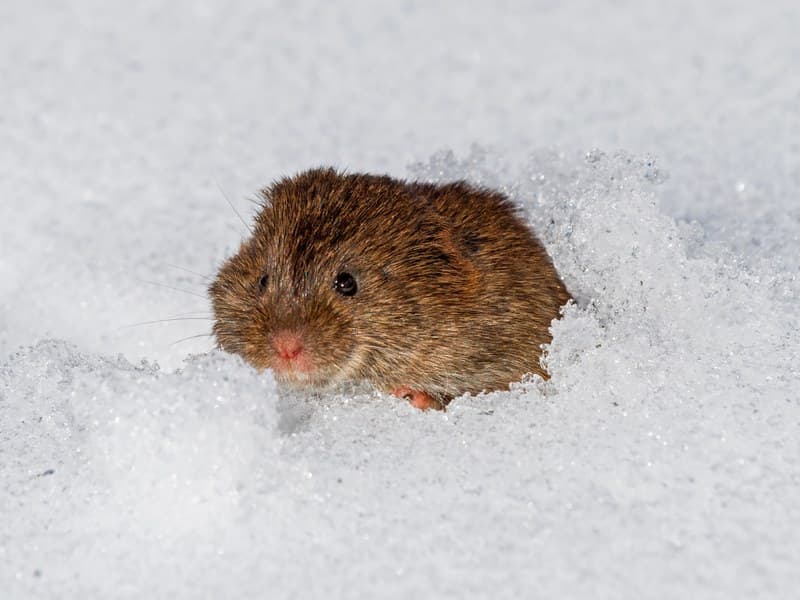
Voles aren't house pests — they're lawn pests. They tunnel through grass at the soil surface, especially under winter snow cover, and emerge in spring to reveal dead-grass runways crisscrossing the lawn.
Severe vole years can take out a quarter of a property's turfgrass. EPC offers active trapping, repellent treatments, and habitat modification to break the cycle.
About Voles
Meadow voles and montane voles are common in Colorado. They're stocky, mouse-sized rodents with short tails and small ears, weighing about 1.5 ounces. They live 2–16 months and produce 5–10 litters per year. Populations cycle dramatically — a quiet year can be followed by an explosion the next.
Signs You Have Voles
- Surface runways in the lawn — 1.5 to 2 inches wide, with grass clipped to the soil
- Round 1.5-inch entry holes in the lawn
- Bark chewed off the base of young trees and shrubs (girdling)
- Dead patches of grass appearing as snow melts in spring
- Damage to bulbs, root vegetables, and ornamental plants
How EPC Treats Voles
Active Trap Stations
Snap traps placed at runway entries with apple slice or oat bait. Most effective in late fall and early spring when populations peak.
Repellent Application
Castor oil-based repellents applied to lawn and around tree bases. Drives voles to neighboring habitat without killing them.
Habitat Modification
Tech identifies harborage zones — tall grass, mulch buildup, brush piles — and recommends mowing, mulch reduction, and tree-base hardware cloth wraps.
Bait Stations (Outdoor Only)
Tamper-resistant bait stations placed in active runway areas where heavy populations require knockdown. Used in conjunction with habitat fixes.
How to Prevent Voles
- Mow lawn short going into winter (voles need cover from predators)
- Keep mulch beds 3 inches or thinner — thick mulch = vole highways
- Wrap young tree trunks with hardware cloth from ground to 18 inches up
- Clear brush, woodpiles, and tall grass within 10 feet of the lawn edge
- Remove bird seed scatter under feeders
Frequently Asked Questions
What's the difference between voles and moles?
Voles eat plants and create surface runways visible in the grass. Moles eat insects and create raised tunnel ridges and volcano-shaped mounds. Different pests, different control approaches.
Will my lawn recover from vole damage?
Mostly yes — runways usually fill in by midsummer with reseeding and irrigation. Bark damage on young trees is permanent and may kill the tree if girdling is complete.
When are voles most active?
Year-round, but damage shows most dramatically in spring when snow melts and runways are revealed. Populations peak in late summer and crash by late winter.
Are voles dangerous to people or pets?
Not directly. They don't typically bite, and they don't enter homes. The damage is to lawns, ornamentals, and young trees.
Areas We Treat Voles
EPC handles voles calls across the entire Denver Metro Area. Click your city for local detail:
Related Pests
Free Voles Estimate.
Tell us what you're seeing. We'll diagnose, give you a real quote, and schedule fast.