Wasps & Hornets Treatment
Across the Front Range.
Yellow jackets, paper wasps, bald-faced hornets — nest removal and perimeter control.
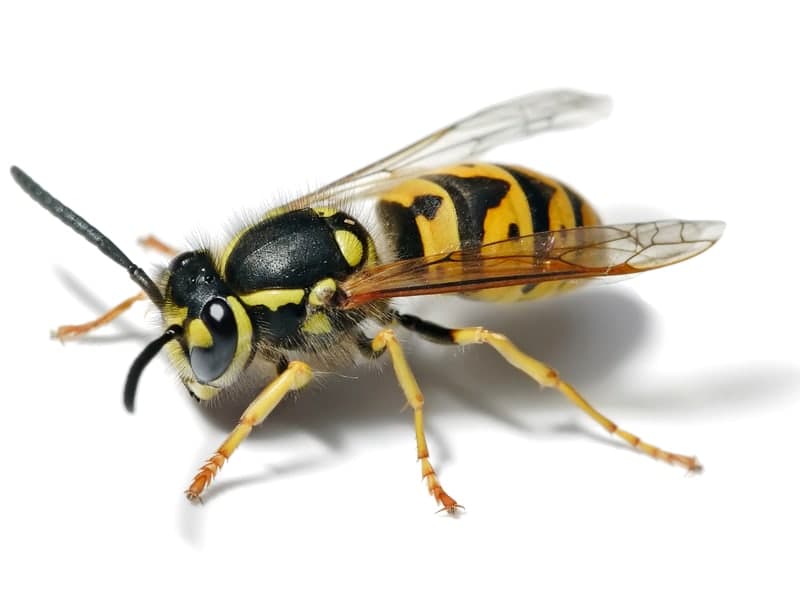
Wasps are the medical-emergency pest. Yellow jackets and bald-faced hornets defend their nests aggressively, and a single accidental disturbance can mean dozens of stings — particularly dangerous for people with allergies.
EPC removes nests safely, treats around eaves and decks where paper wasps build, and follows up to prevent rebuilding in the same season.
About Wasps & Hornets
Common Colorado stinging insects include yellow jackets (ground or wall void nests, very aggressive), paper wasps (open-comb umbrella nests under eaves, less aggressive), bald-faced hornets (large gray football-shaped aerial nests), and European hornets (in some areas). Colonies grow through summer, peak in late August, and die off with frost — except the queens, who overwinter.
Signs You Have Wasps & Hornets
- Visible nest under eaves, on tree branches, or in a wall void
- High wasp traffic at one specific entry point (wall void nest indicator)
- Wasps hovering near picnic food, garbage, or open soda cans (yellow jackets, late summer)
- Discovered ground nest holes with steady wasp traffic in/out
- Scraping sounds inside walls (paper wasps building)
How EPC Treats Wasps & Hornets
Nest Removal
Direct treatment and physical removal of accessible nests — under eaves, in attics, on tree branches. Done in early morning or late evening when activity is lowest.
Wall Void Treatment
Insecticidal dust applied through entry points into wall voids. Wasps walk through it as they enter and exit, eliminating the nest without opening the wall.
Ground Nest Treatment
Yellow jacket ground nests treated directly at the entry hole. Treatment kills the colony within 24 hours; the hole is then covered.
Preventive Eave Treatment
Spring residual treatment to common nesting zones — eaves, soffits, deck undersides — discourages early-season queens from establishing new nests.
How to Prevent Wasps & Hornets
- Inspect eaves and decks weekly in spring; remove tiny early-stage nests before they grow
- Cap or seal openings in eaves, soffits, and chimney flashing where wasps can enter wall voids
- Keep trash cans tightly closed; rinse soda cans before recycling
- Avoid wearing strong perfumes, bright florals, and dark clothing near nest zones
- Don't swat at lone wasps — fast movement triggers aggression
Frequently Asked Questions
How do I get rid of a wasp nest safely?
Don't try if it's larger than a golf ball, in a wall void, or in the ground. The risk of multiple stings (and an allergic reaction) is significant. Professional removal is fast and inexpensive.
Will the nest come back next year?
Wasps typically don't reuse old nests, but they often build very close to the same spot — same eave, same wall void. Removing the empty nest and treating the area in spring prevents rebuilding.
What if I'm stung and have an allergy?
Use your epinephrine if prescribed, then call 911. Don't wait. Most fatal sting reactions occur within an hour of the sting.
Are bees and wasps the same?
No — bees are pollinators (most colonies should be relocated, not killed). Wasps are predators. We treat wasps and refer honeybee colonies to local beekeepers for relocation.
Areas We Treat Wasps & Hornets
EPC handles wasps & hornets calls across the entire Denver Metro Area. Click your city for local detail:
Related Pests
Free Wasps & Hornets Estimate.
Tell us what you're seeing. We'll diagnose, give you a real quote, and schedule fast.